“Security is not a feature—it’s a mindset.” – Bruce Schneier
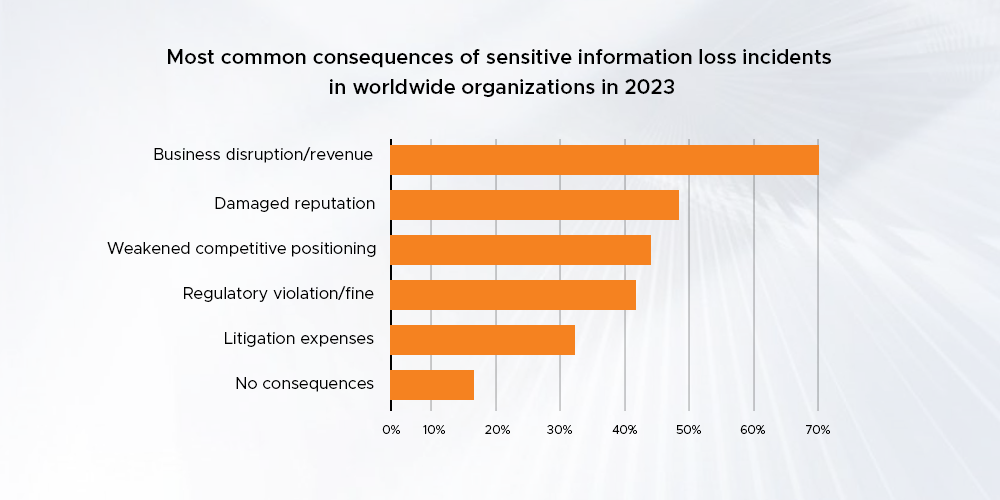
With the widespread use of the Internet and adoption of AI, cyber threats tend to increase. 2025 saw a 34% increase in cyberattacks, causing more security breaches than the last year. The cyber risks to individuals and organizations have been greater than ever. This is where DevSecOps as a Service (DSaaS) steps in!
This guide breaks down the benefits of DevSecOps as a Service, along with its components, tools, and best practices. Learn how to build a faster, smarter, and safer development ecosystem!
What is DevSecOps as a Service (DSaaS)?
As an evolution of the DevOps practice, DSaaS integrates security practices within the software development lifecycle (SDLC). From planning through deployment, it integrates security at every stage. This approach ultimately improves collaboration between development, IT operation, and security teams.
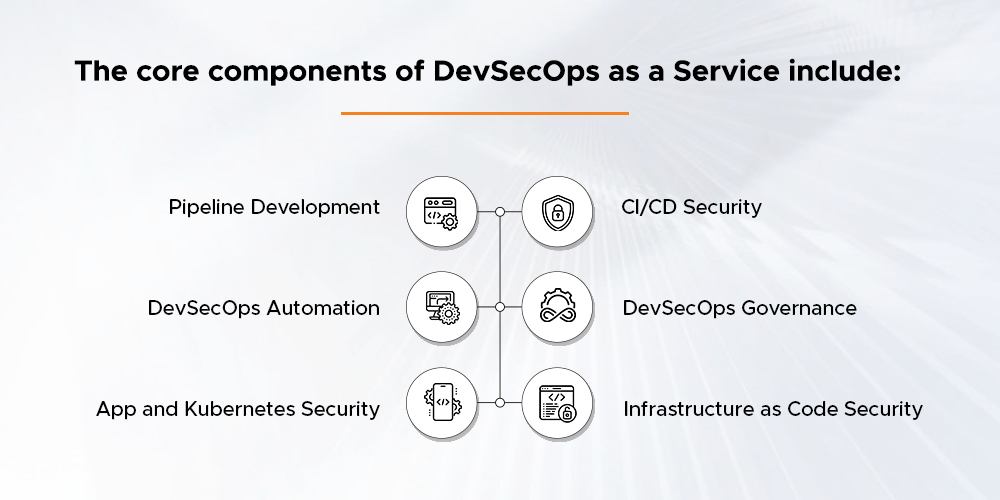
- Pipeline Development: This integrates testing, security, and deployments into a single automated workflow.
- CI/CD Security: Adding checks at each of the coding, development, and deployment stages to find problems early.
- DevSecOps Automation: Automating repetitive tasks involving vulnerability scanning, compliance checking, and validation of configurations.
- DevSecOps Tools Integration: Amplifying your current tech stack by adding advanced SAST, DAST, SCA, and IaC tools.
- DevSecOps Governance: Organization-wide enforcement of rules, standards, and policies for consistent security.
- App and Kubernetes Security: Protecting application code, APIs, microservices, containers, and cluster configurations.
- Infrastructure as Code Security: Scanning every IaC file in advance to prevent misconfigurations before deploying cloud infrastructure.
- Continuous Monitoring: Tracking threats, along with anomalies, policy violations, and runtime behaviors.
Why DevSecOps as a Service Matters?
Businesses wish to move faster, but not at the expense of security. That’s where DevSecOps enables them to ensure both speed and security. It’s all about continuity, automation, and sharing among teams without relying on end-stage checks.
The biggest benefits of DevSecOps as a service in software lifecycles:
- Enhanced Protection: DevSecOps teams can deploy faster because of the automation of security scans that get integrated into the pipeline.
- Veteran-Level Expertise: There’s no need to employ a whole in-house team when DevSecOps strategy consulting can provide those experts at a fraction of the cost.
- Consistent Security: DevSecOps governance frameworks and standardized policies ensure consistency in the level of security in each project.
- Automatic Compliance: Continuous monitoring controls enable HIPAA, GDPR, PCI-DSS, and SOC 2 compliance much more easily.
- Lower Long-Term Costs: Early detection leads to cheaper fixes. DevSecOps reduces downtime, breach costs, and rework.
What Are the Best DevSecOps Tools to Integrate Across Your Pipeline?
A powerful DevSecOps workflow is one that takes advantage of several scanning tools, monitoring platforms, and AI-driven automation engines working together to help harden your cybersecurity posture. Below are some core DevSecOps tools:
| Category | DevSecOps Tools | Feature |
|---|---|---|
| SAST | SonarQube, CodeQL, Semgrep | Find vulnerabilities in code before runtime |
| DAST | OWASP ZAP, Burp Suite | Detect security flaws in running applications |
| SCA | Snyk, Dependabot | Identify risks in third-party libraries |
| Container Security | Trivy, Aqua Security | Scan images & registries for vulnerabilities |
| Kubernetes Security | Falco, Kube-Bench | Threat detection & cluster compliance testing |
| IaC Scanning | Checkov, tfsec | Prevent insecure cloud configurations |
| Secrets Management | Vault, AWS Secrets Manager | Protect API keys & sensitive credentials |
| CI/CD Security Add-ons | GitHub Advanced Security | Embed security checks into pipelines |
| Monitoring Tools | ELK/EFK, Datadog | Provide logs, alerts, & anomaly detection |
Best Practices to Successfully Adopt DevSecOps as a Service
Adopting DevSecOps successfully requires more than tools—it requires discipline in workflow, automation, governance, and security. Following the right best practices ensures that teams evolve collaboratively, workflows become more secure, and products launch faster without risk.
Practices that organizations can take to ensure a successful transition to DevSecOps:
- Start Small and Build Gradually: Implement in a single microservice and gradually increase the load.
- Emphasize “Shift-Left” Security: Catch issues early by means of architecture reviews, secure coding, and automated scans.
- Automate Yet Retain Human Oversight: Combine AI and automation with human review and approval of key processes.
- Standardize Security Governance: Policies should be uniform among teams and pipelines.
- Secure Infrastructure as Code: Scan all IaC templates before deployment to prevent misconfigured cloud resources.
- Monitor Production Continuously: Remain visible even after deployment.
- Establish a Security Culture: Regularly train your teams, accompanied by shared responsibility within the teams.
Why SecureSmartz for DevSecOps as a Service in the USA?
At SecureSmartz, we don’t just talk the talk. We combine MDR prowess with AI-augmented DevOps mastery to accelerate your SDLC. From config management to tool optimization, we minimize disruptions and boost reliability.
Whether modernizing legacy apps or scaling to Kubernetes, our DevSecOps as a Service ensures precision at every stage. It’s a complete service—strategy, implementation, automation, compliance, and ongoing optimization.
With SecureSmartz, you will get:
- End-to-end DevSecOps automation driven by AI
- CI/CD optimization and security engineering
- Cloud-native security for applications and Kubernetes
- DevSecOps governance frameworks that suit your team
- Continuous monitoring and compliance
- US-focused regulatory and audit support
Conclusion
In a digital landscape filled with threats, security can’t really afford to wait until the very end. DevSecOps as a Service lets organizations take a future-ready approach towards embedding security everywhere automatically and continuously. Whether you’re moving into cloud-native architecture or prioritizing compliance, DevSecOps keeps your software secure, stable, and competitive.
Frequently Asked Questions
- Automated checks
- Policy enforcement
- And audit-ready reporting.
- Healthcare
- Fintech
- SaaS
- Government
- Retail
- Logistics